

Transforming the Future of Golf with AI: Behind the Scenes of "Good Shot" and the Value of Continuous Challenge
Checking one's swing form is essential for improving at golf. However, filming on the course presented a major challenge, as it often caused slow play and delayed overall pace. Driven by a genuine passion as a golfer himself, Takafumi Nishimiya spearheaded a project to solve this: "I wanted to create an environment where golfers can focus more on their play and share memorable moments." That project is "Good Shot," an AI-powered auto-filming system mounted directly onto golf carts. Venturing beyond the boundaries of a traditional travel agency into a brand-new domain, Nishimiya shared the behind-the-scenes struggles of launching the project and the mindset that fuels his commitment to overcoming obstacles and continuous challenge.
What brought you to HIS, and what was your relationship with golf back then?
My journey with HIS began with a memory from a middle school field trip. Back then, I found immense joy and excitement in planning the itinerary and organizing the schedule myself, a feeling that stayed with me for years. When job hunting, I came across a hiring notice for HIS and applied immediately, knowing it was the right place for me. The domestic travel department I was assigned to was not HIS's primary line of business at the time. However, I saw it as a domain with huge growth potential and launched my career there, building consistent experience through sales and establishing specialized Okinawa travel offices.
Golf was a sport I was deeply involved in long before it became part of my work. Influenced by my parents, I started early and spent three years in high school as a member of the golf club, aiming to turn professional. However, facing the harsh reality of the pro path and my own shortcomings, I stepped away from golf completely upon graduation. I only picked it up again as an adult when a senior colleague invited me. That's when I rediscovered the pure joy of simply playing it as a hobby. Later, as I began to wonder how I could give back to the sport and what I might be able to contribute, I started volunteering in initiatives aimed at attracting new golfers to address the industry's shrinking player base. I believe that passion ultimately became the major catalyst for taking on this new business venture.
How did you come to challenge the internal start-up program, and how did you reach the idea for "Good Shot"?
During the pandemic, as my opportunities to go out decreased and I found myself with a good chunk of free time, I thought to myself, "Is there anything I can do using golf to make the most of this time?" That was what initially sparked my journey, leading me to discover an external idea platform.
At first, I proposed selling clubs for SNAG Golf*--a program designed for children as young as two--but it was unfortunately turned down. However, I later saw a recruitment post on the same platform looking for members to drive an "automated recording system" project that had advanced to the selection stage, so I decided to join the team.The initial proposal was to place stationary cameras at the teeing area (1st shot) and the green (final shot) of golf courses to generate videos. However, installing cameras across every hole presented a high financial hurdle. Beyond that, I wanted to create a genuinely new experience rather than simply automating a conventional recording service. Drawing from my own experience as a golfer, I suggested: "If we mount a camera on a golf cart that moves along with the players, couldn't we capture dynamic swing shots that were never possible before?" That proposal was the very first step toward the birth of "Good Shot."
After waiting out the two-year rights period for the idea, I obtained official permission and entered the internal entrepreneurship initiative, "HIS Start-up Program," in 2024 to turn it into a business under HIS. Following presentations to the executive team and proof-of-concept (PoC) testing, "Good Shot" officially launched in January 2026.
Tell us about the mechanics of "Good Shot" and how it innovates beyond traditional photography.
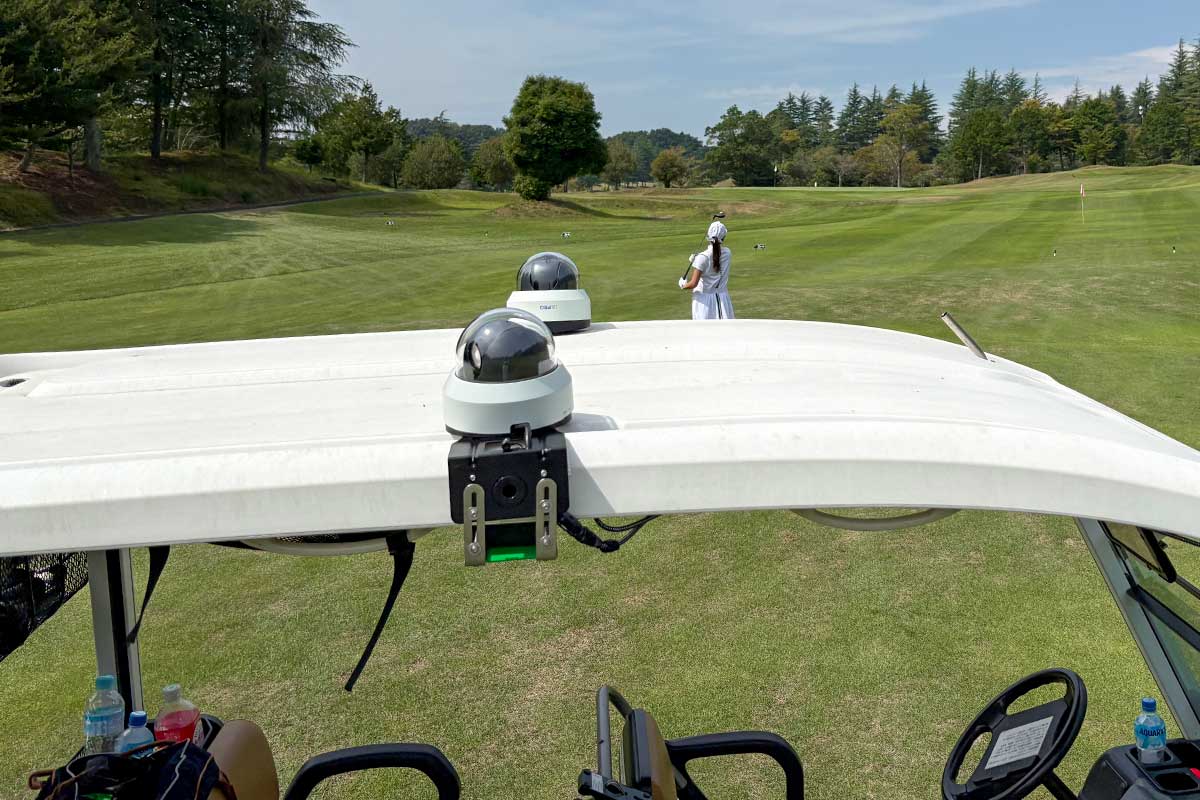
"Good Shot" is a system featuring a golf cart-mounted camera that uses AI to automatically detect and track golfers, recording and editing videos of their swings during play.
Traditionally, golfers rely on companions to capture video using smartphones. However, strict pace-of-play etiquette ('play fast') means filming often leads to delays and stress about holding up groups behind. Furthermore, once players scatter after their tee shots, it becomes nearly impossible to film each other anyway. "Good Shot" takes the hassle away by recording everything automatically from the cart, so you never have to worry about delaying play. Another major plus is its AI, which recognizes motion and audio to automatically edit your best moments into a highlight reel.
How are the filmed videos delivered and used?
Once you finish playing, we provide video data of each hole, broken down into one-minute segments. This structure considers the data load when uploading from the golf course to the server. The AI then automatically edits these into an easy-to-view digest format for the player. Regarding audio, we have implemented measures such as overlaying pleasant background music to ensure that surrounding noise or private conversations are not too clear, protecting privacy.
There are three main ways the videos are used.
The first is as a pure "Memory/Entertainment" tool. Whether it's your very first round or a three-generation family outing, you can preserve your best memories on video even when you don't have the time to pull out your phone.
The second is as a tool for "Skill Improvement (Score Improvement)". While driving ranges are flat and pressure-free, actual courses are full of slopes and varying conditions. By visually comparing your range swing with your course swing, you can objectively spot your habits. People tend to be conscious of the camera at first, but after a few holes, they forget it's there, allowing for natural swings to be captured. Customers have excitedly reported that bridging the gap between their mental image and actual form helped them score their personal best.
The third use, which we didn't initially anticipate, is "Management and Security" for the golf courses, and "Workforce Development".
Facilities utilize the footage to verify accident claims, prevent theft, and train new recruits by recording elite caddies in action. It has naturally aligned with golf courses' critical operational and workforce development needs.
Moving from B2C Travel Sales to B2B Corporate Sales. What was the biggest "Wall" you faced, and how did you overcome it?
Previously, I was primarily focused on B2C travel sales, so stepping into B2B sales targeting golf courses felt like entering a completely different world. The biggest hurdle was navigating the golf industry's conservative attitude toward new technology, combined with my own lack of B2B sales experience. Simply mentioning that we would "film players with cameras" often led to immediate rejections over privacy concerns, with clients telling us, "We don't need that here." On top of that, having only handled B2C customer service, I lacked expertise in contract negotiations and business planning--at first, I couldn't even build a proper PowerPoint presentation.
What helped me overcome these challenges was internal support and a complete shift in my sales mindset.
The "HIS Start-up Program" team worked closely with me to refine the business plan again and again, while various departments--including legal, accounting, and IT--collaborated seamlessly to back me up.
On the sales side, I committed completely to a gritty, good old-fashioned hustle on the ground. Even after being turned down, my mindset shifted thanks to my manager's advice: "It's totally normal to follow up repeatedly until they remember your face. Once they feel your passion, they'll hear you out." I made cold calls one by one to golf courses across the Greater Tokyo Area to secure meetings. As I kept visiting them in person, doors began to open. I was invited to speak at golf course managers' association meetings and ran trial runs by mounting cameras directly onto carts during tournaments. Through this process, my ability to draw out a client's true feelings--along with my delivery, facial expressions, and tone of voice--improved dramatically.
What is the future vision for "Good Shot"?
First, we are expanding into the Kansai region, which has the second-highest number of golf courses after Kanto. We have already received inquiries and will proceed as soon as preparations--such as establishing a solid support system--are in place.
Additionally, capturing irreplaceable travel memories on video offers exceptional value to our customers. To match seasonal golf demand--such as Hokkaido in the summer and Okinawa in the winter--we aim to expand our market footprint by fully leveraging HIS's network and resources. We also plan to create synergies with our travel business by integrating "Good Shot" into inbound travel packages and promoting its use for corporate golf tournaments.
Looking ahead, we are eyeing expansion into overseas resorts like Hawaii, Guam, and broader Asia. Capturing moments of customers enjoying golf against the backdrop of beautiful travel destinations--and letting them bring those memories home on video--will undoubtedly deliver the unique value that HIS stands for.
Finally, a message for those looking to step out of their comfort zone and try something new.
Having spent many years in the domestic travel division, I always kept my eyes open for new opportunities to challenge myself. If anyone out there is hesitating to take a leap, I'd tell them: "Even if you try and fail, it's not the end of the world."
The experience of failing itself unequivocally becomes your greatest asset. My very first proposal for Snag Golf was rejected, but because I never stopped staying curious and pushing forward, "Good Shot" exists today.
Life is short. When you feel like doing something or discover a field that interests you, take action--even if it's just a small step. By not being afraid to take the first step and persisting through failure, a new path will surely open for you.
※SNAG Golf is a sport developed by American professional golfers that allows children and beginners to safely and enjoyably learn the basics of golf. Players compete for points by hitting balls onto sticky targets.
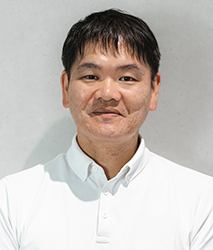
Nishimiya Takashi
H.I.S. Co., Ltd.
New Business Management Division
Future Co-Creation Department
Golf Solution Team
Joined in 2004.
Worked for many years as a travel consultant in the domestic travel division and was involved in launching the Okinawa specialty store. Launched "Good Shot" through the "HIS Start-up Program" in 2024 and continues to lead the project today.
※Article content is based on the time of the interview.