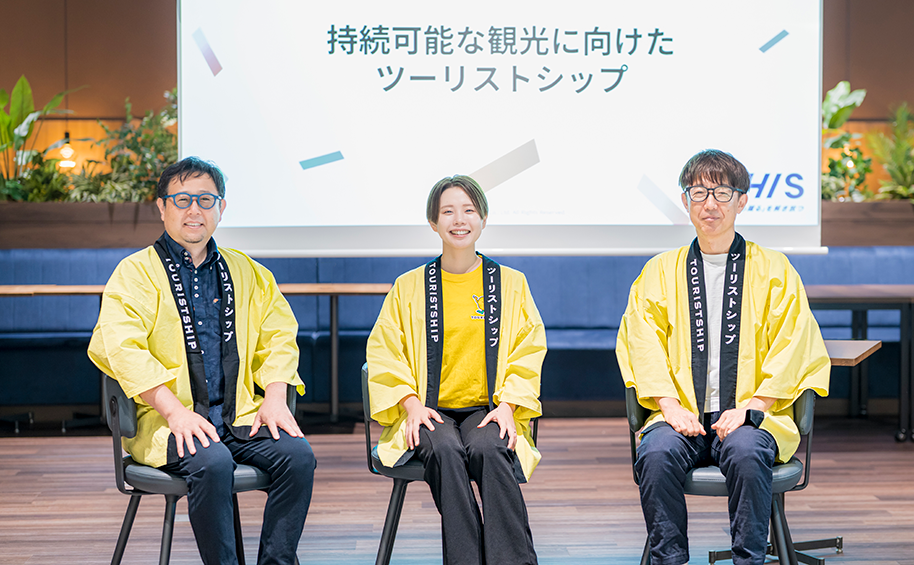

HIS Sustainability Week 2026: Touristship for Sustainable Tourism
Here is a summary of a special panel discussion from "HIS Sustainability Week 2026," an internal HIS event held from September 28 to October 9, 2026. With Professor Sameshima from the Faculty of Tourism and Literature at Komazawa Women's University serving as moderator, Ms. Tanaka Chieko, Representative of the General Incorporated Association Touristship--which advocates for "Touristship" to foster travelers who are considerate of local communities--and Mr. Yamanobe, a Director at HIS, engaged in a discussion on sustainable tourism.
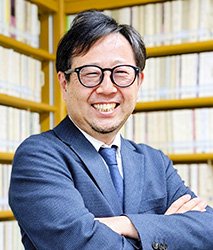
Professor Sameshima Taku, Faculty of Tourism and Culture, Komazawa Women's University
https://www.komajo.ac.jp/uni/faculty/d_tourism/index.html
At HIS, he promoted management planning, tour planning for overseas and domestic travel, and new businesses, and has received the Commissioner of Japan Tourism Agency Award in 2015 for his study tour initiatives. Subsequently, he engaged in international cooperation and tourism development as a JICA expert, and currently serves as an instructor of "Behavioral Economics" at the Sawada Management Dojo; Board Member of the Travel and Learning Council.
[Latest Book] A Complete Text Book Guide to the Structure and Business of the Travel Industry

Touristship, General Incorporated Association Representative Tanaka Chieko
Born in Chiba. In 2019, while a student at Kyoto University, she founded the General Incorporated Association and serves as its representative. After graduating, she signed an unprecedented professional contract with Dydo Drinco Co., Ltd. as a social entrepreneur; she is currently under contract with Wao Corporation. At the 2023 International Youth Day, she was the only Japanese person selected among the nine young people from around the world chosen by DTTT. In 2025, she received the Kyoto City Special Award at the Forbes "CULTURE-PRENEURS AWARD 2025." She is also the author of *Why Not Become Someone Who Is Liked Wherever You Travel with "Touristship"?*.
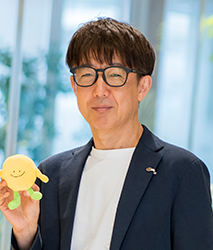
H.I.S. Co., Ltd. Director, President of HIS JAPAN Yamanobe Atsushi
※Article content is based on the time of the interview.
"Touristship" is a concept that is currently attracting attention and questioning the nature of travelers
Sameshima: For years, the tourism industry has focused primarily on the question of "how to increase the number of travelers." However, as various issues--such as overtourism, which affects residents' daily lives--have come to the fore, the question now being asked is "how travelers behave." Tourism is viewed as a social phenomenon comprising three key stakeholders--travelers, tourism businesses, and local residents--and is sustained through their mutual relationships. In this context, to achieve sustainable tourism, we must recognize that travelers themselves, not just the local community and businesses, play a key role. So, to start, what concerns motivated you to launch this Touristship initiative, Ms. Tanaka?"
Tanaka: "Touristship" refers to a "traveler's mindset"--an attitude and set of behaviors that involve showing consideration for the destination, contributing to the local community, and enjoying cultural exchange. For example, when travelers visit our hometown, we might wonder, "Are they following the rules properly?" Yet, when we become travelers ourselves, don't we sometimes become oblivious to our own behavior? We tend to pay close attention to tourists' manners when we're residents, yet find it difficult to be mindful of our own manners when we're traveling. I came to believe that unless we resolve this contradiction, we won't be able to solve various tourism-related challenges. That's why we've launched an initiative to create and promote a concept that encourages travelers to show consideration for the local people's lives, nature, culture, and environment during their trips--so that their visits bring even a little joy to the host community.
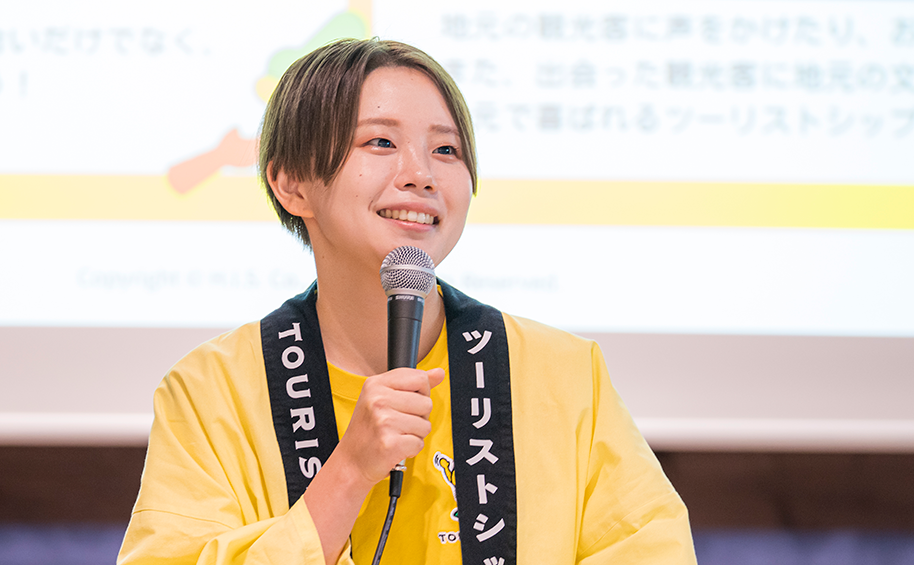
Sameshima: So this isn't just a standard "let's follow the rules" kind of etiquette campaign, is it? What's the main difference?
Tanaka: I think etiquette campaigns generally focus only on "being considerate of your destination." On the other hand, "Tourism Ethics" encompasses three key elements: "Consideration," "Contribution," and "Interaction." While "Consideration" naturally includes following basic rules of etiquette, I believe positive actions--such as contributing to the destination, buying local products, or greeting locals in their native language--go beyond mere etiquette. We've compiled a "Tourism Ethics Action Guide" that lists 68 examples of "actions that bring joy to the destination." This isn't meant to imply that you must do all 68 items; rather, it's a compilation of recommendations--suggestions along the lines of "Why not try something like this?"--for when you have the time and flexibility to choose. We're very conscious of providing travelers with options for how they can act.
Sameshima: This guide is put together in a very easy-to-understand way. I feel that it's not so much about making grand social contributions, but rather that small actions taken by travelers during their trips are what foster truly responsible tourism.
"Touristship" from a Travel Agency's Perspective
Sameshima: HIS signed a partnership agreement this past September to promote "Touristship." From your perspective, what does this concept represent?
Yamanobe: It all started when Professor Sameshima introduced the concept to me during our discussion at last year's Sustainability Week. It's often said that travel is more enjoyable when you learn about the destination beforehand. Just knowing the historical background of a place--or why a particular building was constructed in that specific location and form--adds depth to the journey. Our code of conduct also states, "Let's thoroughly learn about history and culture," and by delving deeper into this, we should be able to discover new ways to enjoy travel. I felt that this is precisely where travel agencies should focus going forward.
Sameshima: Travel agencies not only have touchpoints with customers but also maintain close relationships with business partners and tourist destinations. While it's easy to understand from a business perspective how to meet customer requests, I imagine there are challenges involved in telling customers "please do this" or "please don't do that." What are your thoughts on that?
Yamanobe: Mr. Tanaka once said, "Tourist etiquette isn't just a set of rules to be followed, nor is it merely a set of instructions to enforce compliance. It's rooted in one's pride and identity. Isn't there something inspiring about taking the initiative to be mindful, ensuring future generations can continue to enjoy travel?" Rather than forcing customers to do something, I feel a positive message--that being considerate helps protect the future of travel and is something to take pride in--is far more likely to resonate with people.
How can we turn principles into action and spark personal transformation?
Sameshima: Could you share some specific examples of the initiatives you've undertaken with companies and local communities to promote the concept of "Touristship"?
Tanaka: Every month, we hold quiz events at tourist destinations and collaborate with local governments that promote proper etiquette to disseminate information. However, we still felt there were challenges when it came to directly engaging the general traveling public. Through this collaboration with HIS, we hope to introduce this concept to an even greater number of travelers.
Sameshima: How does HIS plan to promote Touristship going forward?
Yamanobe: We intend to take on an educational role to help all stakeholders--including travel agencies, corporations, and local governments--understand "Touristship." But of course, this isn't about self-promoting ourselves with a slogan like, "Travel with HIS, the company championing Touristship."
If the spirit of Touristship were to spread throughout the world, travel itself would become sustainable, and we could preserve wonderful travel destinations for future generations. Of course, HIS cannot create such a world on its own, which is why we are committed to sharing this vision widely and bringing as many people on board as we can.
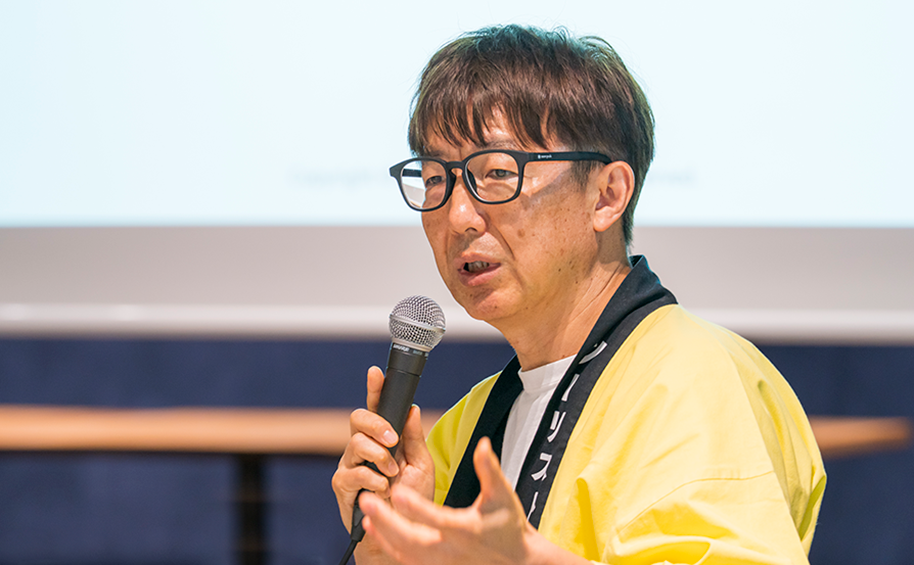
Fostering mindful travelers, spotlighting great examples, and making it a shared culture
Sameshima: Research shows that regions with a high proportion of residents who travel frequently tend to be more welcoming toward tourists. In other words, the more people travel themselves, the more empathetic and tolerant they become toward other travelers. While traveling, people face various difficulties and experience the kindness of locals helping them out. Studies also find that when their roles reverse and they become the ones offering hospitality, they naturally pay that kindness forward through a more welcoming attitude. In that sense, I believe that "nurturing travelers" is directly linked to the promotion of Touristship. It is extremely important to consider how we pass the baton of being a good traveler on to our next destination. Mr. Yamano, what kind of mindset and behavior do you think are necessary for each of us to become a "good traveler"?
Yamanobe: Every single member of our staff is also a traveler themselves. When we're out traveling, I'd like us to continuously update our code of conduct based on what we personally experience on the road--moments where we think, "We should add this to our guide." Once people start traveling with that kind of perspective, I think a natural desire to pass their own experiences on to the next person begins to grow. It would be wonderful if people could enjoy their travels while also embracing the mindset of passing those values forward through the concept of touristship."
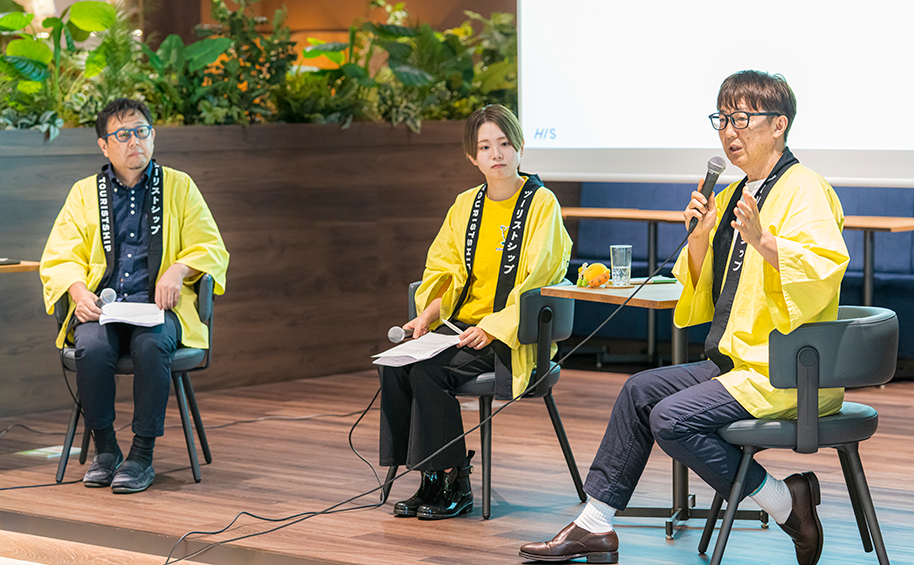
Sameshima: So this is an initiative aimed at bringing to light the "traveler's perspective" of all HIS employees.
Tanaka: For those leading tours overseas, I would love to see them help build a culture of "spotting great travelers" as well. It would be wonderful if they didn't just practice touristship themselves, but also nominated and recognized others for their thoughtful actions. For example, after a major sporting event, people talk about the athletes' sportsmanship and standout moments. Yet after long holiday weekends, the news is dominated by negative stories about overcrowding and littering--we rarely hear stories about good travelers. I'd love for us to work together to build a culture where we shine a spotlight on kind, considerate travelers and celebrate one another.
Yamanobe: That's a wonderful idea. Just like quiz events at tourist spots, raising awareness right there and then--while you're actually on your trip--is extremely effective, and people are likely to find it more engaging. Speaking of HIS tours, I believe that even just a few words from a tour guide familiar with local conditions, shared from a local perspective, can have a significant impact on our guests.
Tanaka: Touristship is built on three pillars: "Consideration," which reduces negative impacts; and "Contribution" and "Interaction," which generate positive impacts. Some people may find "contribution" or "interaction" a bit challenging. In those cases, simply adopting a stance of thoroughly practicing "consideration" is sufficient; for those who are good at interacting, I hope they'll actively choose to engage in "interaction" and "contribution." The ideal scenario is for each traveler to practice these principles within the limits of what they find enjoyable and to return home having left a positive impact behind.
Sameshima: People are the driving force behind tourism, and it is also people who are inspired to take action. That is precisely why I believe it is most important for "touristship" to be nurtured through these "interactions". Tourism inevitably involves the movement of people, but this means more than just the exchange of money--it also signifies the flow of human knowledge, skills, and culture. When interactions occur, it naturally follows that these cultures and skills are exchanged in both directions. Seen this way, the real value of "touristship" lies in how it communicates these values to the host community through everyday interactions.
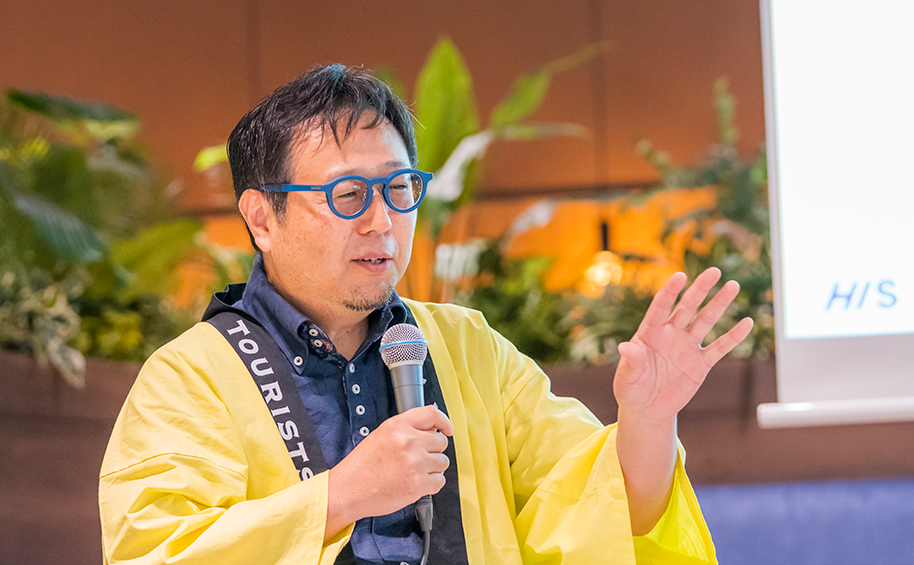
Tanaka: If the concept of Touristship resonates with you, I encourage you to keep it in mind as one mindset to bring along on your travels. My hope is to see more travelers--even just one more--who make their destinations genuinely glad they came, leaving locals saying, "Thank you for visiting."
Yamanobe: I believe that by creating a world where "Touristship" takes root, we can help make travel more sustainable. HIS will work alongside you on this initiative, using it as a starting point to inspire more people to travel with a kind heart.
Sameshima: Thank you both for such powerful and passionate insights. If this really becomes a reality, HIS will truly become "a company that creates a culture of travel." I look forward to a wonderful future and will continue to support your efforts. Thank you once again.